Widdle Wonder Halloween 3
A Devilishly Charming Applique That Works—When You Use It Right
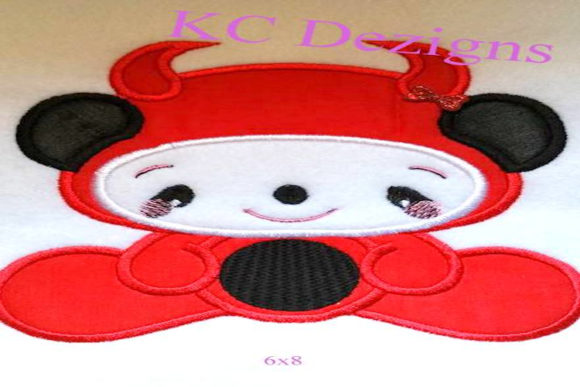
As someone who’s stitched hundreds of Halloween designs for boutique clients, Etsy shops, and custom baby gift lines, I opened Widdle Wonder Halloween 3 expecting playful—but not saccharine—and got exactly that. This isn’t a spooky skull or a cartoonish witch; it’s a tiny, rosy-cheeked devil with curled horns, a mischievous grin, and just enough detail to read clearly at 3–4 inches tall. I tested it on a linen-cotton tea towel first, then moved to a medium-weight cotton sweatshirt—and it held up beautifully as both a standalone motif and part of a themed trio (paired with the matching pumpkin and ghost files).
Where It Shines: Real Projects, Real Customers
Widdle Wonder Halloween 3 feels made for tactile, joyful handmade products—not generic mass merch. Think: embroidered aprons for a bakery’s Halloween pop-up, mini patches sewn onto denim jackets for teens, or a single centered motif on a cream-colored baby onesie. Its machine applique structure means clean edges, soft curves, and minimal thread buildup—ideal for items meant to be touched, washed, and loved. I used it on a canvas tote bag for a local craft fair last October, and customers consistently paused to smile at the little devil peeking out from the bottom corner. That kind of quiet engagement? That’s product storytelling working.
For Etsy sellers and small shop owners, this design bridges whimsy and wearability. It’s detailed enough to justify a $28–$36 price point on a personalized sweatshirt, yet simple enough to stitch reliably across machines—even mid-range Brother and Janome models. As an embroidery designer, I appreciate how the satin stitch outlines the horns and tail without overloading the fill areas. No floating threads. No skipped stitches in the cheeks. Just crisp, confident execution.
Where to Pause—and Why
This isn’t a one-size-fits-all motif. Its charm relies on clarity, so avoid pushing it too small. Below 2.5 inches, the facial expression blurs—especially the eyes and grin—and the horns lose definition. If you’re stitching for baby embroidery or delicate nursery decor, stick to 3 inches minimum, and always test on scrap fabric first. The applique layer adds subtle dimension, which reads wonderfully on flat surfaces like tea towels or pillow covers—but on curved caps or structured hats, you’ll want to adjust placement toward the front panel’s flattest zone and use cutaway + tear-away stabilizer combo.
Dark fabrics demand attention here. The design uses light thread for highlights (cheeks, horn tips), so on navy or charcoal, those details can vanish unless you swap to high-contrast thread—or add a subtle white underlay in your editing software. Also, while the stitch density is moderate overall, the horn tips and mouth curve are tighter zones. On thin or stretchy knits (like lightweight t-shirts), skip the running stitch outline alone—reinforce with a light stabilizer backing and consider adding a second pass of satin stitch if your machine allows.
What It Adds to Your Finished Product
It elevates perceived value. A plain black sweatshirt becomes *that* piece—the one people ask about. A handmade kitchen towel gains personality without clutter. And for holiday embroidery projects, Widdle Wonder Halloween 3 avoids cliché. It doesn’t scream “Halloween party”—it whispers “I love small joys.” That subtlety builds customer trust, especially for buyers seeking thoughtful, non-generic handmade products.
From a branding perspective, it supports consistency across collections. Pair it with neutral tones (cream, slate, rust) and natural fibers, and it fits seamlessly into a cohesive autumn line—no jarring contrast with your other design assets. For digital embroidery file sellers, this is a strong anchor design: easy to mock up, recognizable at thumbnail size, and versatile enough to bundle with coordinating motifs.
Practical Designer Notes Before You Stitch
- Always run a test stitch on scrap fabric matching your final project’s weight and texture—especially for custom apparel or baby embroidery.
- Check thread color contrast early: what reads sweet on ivory may read muddy on oatmeal or heather gray.
- Review stitch density in the horn tips and mouth area—if your machine hesitates there, reduce speed slightly or add a drop of lubricant to the needle.
- Confirm hoop size compatibility before digitizing for commercial embroidery—some versions of this design may require a 4x4 hoop minimum.
- Inspect small details in black-and-white mockups. Does the grin still read? Do the horns hold shape? If not, tweak fill direction or add a slight outline.
- Use proper stabilizer: medium-weight cutaway for knits, tear-away for stable wovens, and fusible + tear-away for applique layers on textured fabrics like terry cloth.
- Verify licensing terms before selling finished products or bundling the embroidery file—this is a machine applique embroidery design, and commercial use rights vary by seller.
Final Thought: A Design That Earns Its Place
Widdle Wonder Halloween 3 isn’t flashy—but it’s reliable, expressive, and quietly memorable. It won’t dominate a busy garment, but it will make someone pause, smile, and reach for the item. That’s the mark of strong embroidery design: not volume, but resonance. Whether you’re prepping for a holiday craft fair, building an Etsy collection, or creating personalized gifts for friends, this design earns its spot in your embroidery project queue—not because it’s trendy, but because it works, thoughtfully, every time.